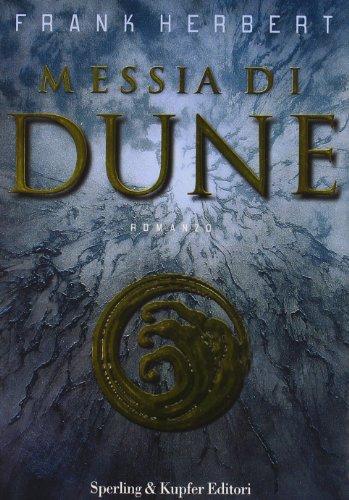
Dune Messiah is a science fiction novel by American writer Frank Herbert, the second in his Dune series of six novels. A sequel to Dune (1965), it was originally serialized in Galaxy magazine in 1969, and then published by Putnam the same year. Dune Messiah and its own sequel Children of Dune (1976) were collectively adapted by the Sci-Fi Channel in 2003 into a miniseries entitled Frank Herbert's Children of Dune.
La scrittura è in alcuni punti ancora più sfumata rispetto a Dune (specie in corrispondenza degli episodi di "prescienza") ma questo rende a parer mio la lettura un po' macchinosa. Nonostante ciò resta un romanzo epico-scifi di valore assoluto, con elementi narrativi che ho trovato molto interessanti ed uno sviluppo dei personaggi quasi impeccabile (forse, solo un po' troppo veloce in alcuni passaggi). Leggerò di sicuro almeno il terzo capitolo.
I read dune Messiah a few months back and am taking time to reflect as I just finished Children of Dune (the third book in the series).
Overall, I was pretty disappointed in Dune Messiah. To me, the plot and characters marked a stark departure from the first book and I was pretty much lost the whole time.
Herbert’s prose even though aesthetically pleasing, especially to me since he tends to borrow a lot of french words to describe the etiquette or customs related to the emperor and empire, gets really confusing especially in passages describing the spice melange and spice trance.
I was taken aback by seeing a character, Paul Atreides, stuck in his progression. Maybe that’s what Herbert wanted to convey in Dune Messiah, but I felt like the character had phenomenal power and super powers yet the story failed to show how he was using them and to which end he wanted to use them.
It also felt to me like the characters lacked individual personality. They seem to all speak in the same way and interact in similar fashion.
I’m rating 3/5 for the world building and the lore but overall was not pleased by the general plot.
“Oof”, that was all I could think of on finishing this. Having failed to muster the interest to do this 35 years or so ago, I have, post-movie, finally caved to the fan recommendations that one “must simply” read this and the next two, at the very least.
What shall I say? 35 years ago me was right on gut judgment and the assessment of entertainment value. Herbert might have intended the Dune cycle to be a meditation on power and Messianic figures from the start, or he might simply have known a good thing when he saw it and milked the success of the first book, but there is a reason why Dune the book is an absolute classic, and Dune the series is for fanpeople* only. The writing is good and moody, but the whole thing is strung out far beyond what the flimsy structure is …
“Oof”, that was all I could think of on finishing this. Having failed to muster the interest to do this 35 years or so ago, I have, post-movie, finally caved to the fan recommendations that one “must simply” read this and the next two, at the very least.
What shall I say? 35 years ago me was right on gut judgment and the assessment of entertainment value. Herbert might have intended the Dune cycle to be a meditation on power and Messianic figures from the start, or he might simply have known a good thing when he saw it and milked the success of the first book, but there is a reason why Dune the book is an absolute classic, and Dune the series is for fanpeople* only. The writing is good and moody, but the whole thing is strung out far beyond what the flimsy structure is able to carry, a novella forcibly, and painfully, stretched to full novel length. It feels “like butter scraped over too much bread”, to quote an author who knew how to really make things last.
Which begs the question: what am I going to do with the next two novels, which I bought cheap and blind? Do bits rot if they are never read?