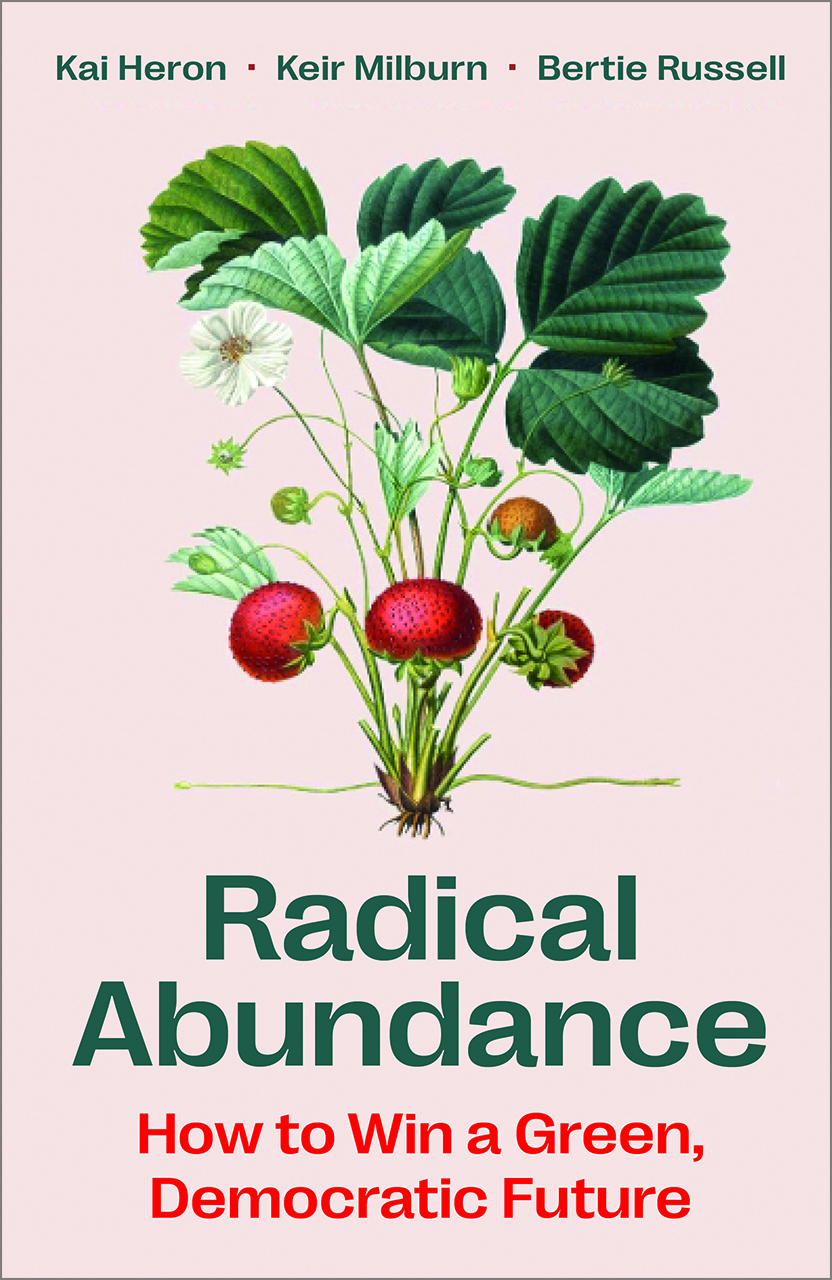

ralentina reviewed Radical Abundance by Kai Heron
The way out of capitalism
4 stars
I loved the premise of the book: so much has been written about what's wrong with capitalism, and a fair amount about what life could look like after capitalism has been dismantled, but we need to think and discuss more how to get there. How do we imagine to be able to transition out of capitalism? Whether one believes it will take a revolution, or taking power by winning democratic elections, the question remains. And it isn't just about how to nurture a revolution or electoral victory, but what it will take after that, since it's clear that socialists had a fair share of revolutions and electoral victories but capitalism is still here. After the necessary disclaimers about the need for conjunctural analysis and specific, context-dependent strategies, the authors propose two key ingredients for a successful transition: popular protagonism (something along the lines of democratisation, the people taking more and …
I loved the premise of the book: so much has been written about what's wrong with capitalism, and a fair amount about what life could look like after capitalism has been dismantled, but we need to think and discuss more how to get there. How do we imagine to be able to transition out of capitalism? Whether one believes it will take a revolution, or taking power by winning democratic elections, the question remains. And it isn't just about how to nurture a revolution or electoral victory, but what it will take after that, since it's clear that socialists had a fair share of revolutions and electoral victories but capitalism is still here. After the necessary disclaimers about the need for conjunctural analysis and specific, context-dependent strategies, the authors propose two key ingredients for a successful transition: popular protagonism (something along the lines of democratisation, the people taking more and more charge, rather than a leader or a party) and contested reproduction (meaning that even before we can dismantle capitalism we need to build up and alternative system/logic through which to organise the social metabolism, the tasks of drawing on nature's resources and caring for one another). Just for these ideas, it was worth reading the book.
The second half, however, changes gear, and goes from the theoretical to the very practical, discussing one very specific institution the authors see as very promising for incentivising popular protagonism and contested reproduction, namely 'public-common partnership'. PCP are models for the ownership and management of productive facilities (the examples are a market, a factory and farms, but it could apply to many more), whereby workers, people (likely, residents within a catchment area) and the state collaborate. Workers have autonomy over how to organise their work, but then turn the profit to a third-party, a sort of assembly where all three types of actors are represented, and that decides on how to re-invest the profits, e.g. by funding other PCPs, or improving local infrastructures. The role of the state here is primarily to de-risk the operations of the PCPs, and possibly to bring in the perspectives of other regions. The idea is compelling, even if the examples are a bit uneven, with the London market being by far the most realistic and thought-through.