ralentina reviewed Monsters by Claire Dederer
The bad person c'est moi
4 stars
Content warning Mega spoilers, in as much as non-fiction can be spoiled
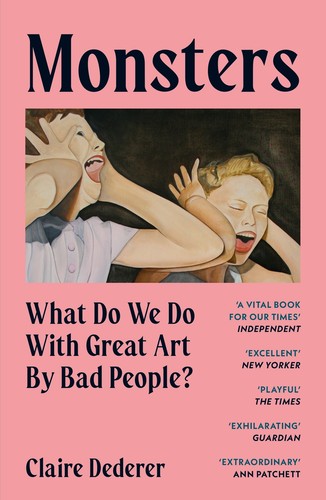
What do we do with great art by bad people? Whatever we want/need to do with it, it's basically the answer. And it's a great answer, Claire Dederer got me convinced. In part, I think, because it makes you regret the question. Like, it's there on the cover, designed to make you pick up the book, and it worked for me, seems so topical and wouldn't it be great to know. But the book in fact picks it apart, on at least two fronts. First, what kind of answer do we aspect? A general rule that applies to all circumstances? Or some sort of algorithm that weights the greatness of the art against the badness of the author? A better approach, the only possible approach, argues Dederer, is to look at the question from the perspective of the audience, that is, from our own perspective. It is clear that knowing someone had done something terrible will affect how we receive and enjoy a work of art; there is no need to turn it into a moral choice, when it's really more a special form of consumption. If it still moves you, make you think, entertain you, whatever, watch it, read it, admire it. If it doesn't, move on. In the second part of the book, Dederer shifts the frame, questioning the idea that some people are bad people (and, by implication, some are good). She points out how gendered is the notion of badness: most bad male artists are bad because they battered their partners and/or children, whereas the ultimate bad behaviour by female artists is to abandon their children [I'm simpliyfying here, she does have a whole chapter about racists and antisemites]. She put the spotlights on herself, and the small ways in which she, too, abandon her children (for days at a time, not permanently) to pursue her art. Is it helpful to draw lines - this is the boundary of irredimability?
Maybe at point the argument gets a bit muddled or risks seeming relativist: Dederer starts off describing Polanski's rape of a child, and ends reflecting on her feeling of guilty for shutting the door to enjoy some privacy and concentration, concluding all artists are bad to some degree (again, I'm oversimplifying). But I do buy the fundamental point, that people are people, and all of them do horrible things.
I'm glad I read it.