ralentina rated Love Me Tender: 4 stars

Love Me Tender by Constance Debré, Peter Straus, Hedi El Kholti, and 1 other
'Destined to become a classic of its kind' Maggie Nelson 'One of the most compulsive voices I've read in years' …
This link opens in a pop-up window

'Destined to become a classic of its kind' Maggie Nelson 'One of the most compulsive voices I've read in years' …

In the mode of Flights, a novel about the rich stories of small places, from the Nobel Prize-winning, New York …
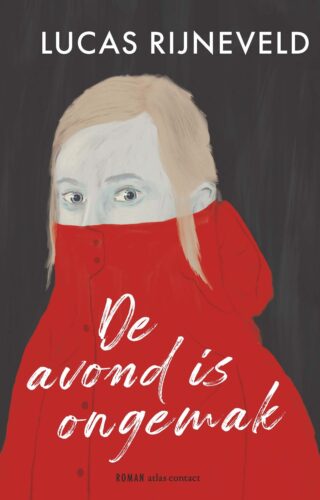
I'm proud to have read this in Dutch, but the result is that I constantly questioned whether I was understanding it right.
In a rural village in the Dutch bible-belt, a boy dies whilst skating on the pond. His sister, Jas, resentful at being left behind and scared her dad may kill her pet rabbit for the Christmas meal, had asked God to take Mathijs instead, and becomes convinced her prayers have been heeded to. This all happens in the first 20 pages or so. In the remaining 250, Jas and her family are left navigating the grief of this loss, a task that slowly destroys them. Death is everywhere, even more so after the village's cows are slaughtered in response to the BSE epidemic.
The book is told from Jas' perspective, i.e. a twelve-year old educated in a strict religious environment. The other main characters are her siblings, Hanna …
I'm proud to have read this in Dutch, but the result is that I constantly questioned whether I was understanding it right.
In a rural village in the Dutch bible-belt, a boy dies whilst skating on the pond. His sister, Jas, resentful at being left behind and scared her dad may kill her pet rabbit for the Christmas meal, had asked God to take Mathijs instead, and becomes convinced her prayers have been heeded to. This all happens in the first 20 pages or so. In the remaining 250, Jas and her family are left navigating the grief of this loss, a task that slowly destroys them. Death is everywhere, even more so after the village's cows are slaughtered in response to the BSE epidemic.
The book is told from Jas' perspective, i.e. a twelve-year old educated in a strict religious environment. The other main characters are her siblings, Hanna and Obbe. Very believably, these kids are naive and well-meaning, victims of the situation, desperate for some signs of affection, especially from their increasingly neglectful parents. They are, also cruel and sadistic. They experience remorse and guilt but, having always conceived of themselves as sinners, there is no relation between the intensity of these feelings and the weight of their actions.
Sex and death are taboo topics in this religious households (even mentioning Mathijs' name is forbidden), but at the same time they're everyday, matter-of-fact occurrences when it comes to the farm animals: cows must be inseminated, chickens are killed, rabbits mate. Indeed, the adults also seem to look at the children's bodies as animals, too: pushing soap up their butts against constipation, commenting on their developments as if they were cattle.
As the book proceeds, the level of darkness, brutality and goriness increases. One could talk of a crescendo, if it wasn't that suicidal thoughts, animal torture and sexual violence come to dominate the second half of the book to the point that there is nowhere to go from there. It is relentless.
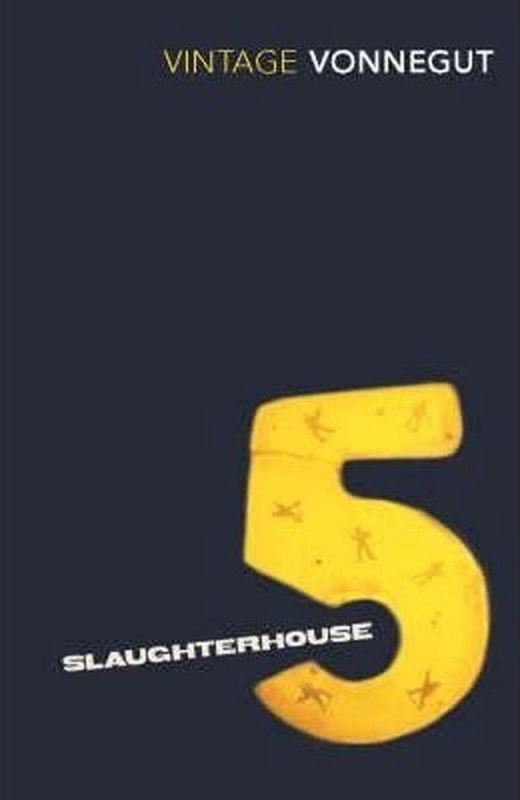
I had read this book as a teenager, and loved it, though I'm now unsure whether I had paused to contemplate what the author was trying to say. This time around, I was somewhat turned off by its misogyny, especially considering the book is meant, in a way, as a critique of macho militarism. It isn't 'just' that the book wouldn't remotely pass the Bechdel test, but also that virtually every woman described in the book is reduced to her attractiveness or lack thereof and, more often than not, characterized as stupid. The partial exception is Montana Wildhack, a (porn?) film star, who is not explicitly denigrated, but whose only function in the story is to have sex with Billy while they're both imprisoned in an alien zoo. Billy is very good about it because he waits until she enthusiastically consents, which strikes Kurt as both exceptional and admirable.
War …
I had read this book as a teenager, and loved it, though I'm now unsure whether I had paused to contemplate what the author was trying to say. This time around, I was somewhat turned off by its misogyny, especially considering the book is meant, in a way, as a critique of macho militarism. It isn't 'just' that the book wouldn't remotely pass the Bechdel test, but also that virtually every woman described in the book is reduced to her attractiveness or lack thereof and, more often than not, characterized as stupid. The partial exception is Montana Wildhack, a (porn?) film star, who is not explicitly denigrated, but whose only function in the story is to have sex with Billy while they're both imprisoned in an alien zoo. Billy is very good about it because he waits until she enthusiastically consents, which strikes Kurt as both exceptional and admirable.
War makes no sense, and neither, one could say, do postmodernist plots. The protagonist -Billy Pilgrim - was/is a young, inept soldier during WWII, who witnessed the Dresden bombing as a prisoner of war, returned to the states to marry the rich daughter of an optometrist mogul and became himself rich. Billy can travel through time, intentionally or not is hard to say. Or, to be more precise: since being kidnapped by aliens, he has learnt to see time the way they do: as a series of moments that coexist, just as peaks of the same mountain range, next to one another. And if time is not consecutive, then it logically follows that things just happen because that's how a given moment is structured, there is no cause and no consequences. So, children are sent to fight in Europe, ill-equipped and frightened, mostly against forcibly conscripted German farmers who would most certainly prefer to do something else. And then they kill each other, and so it goes.
When I came out, I devoured Dykes to Watch Out For, in the edited volume I bought in preparations my very first lesbian book club. I fell in love with the characters and wished my life was more like theirs. I, too, wanted to hand out with lesbians (of which I knew none) and kiss hot people to make a statement at political demonstrations. Which is to say, these dykes were, despite all their flaws, kind of role models. What a weird experience, then, to be able to follow your heroines into middle-age, having settled down in Vermont and made compromises, big and small, with 'the man'.
I related in many ways, I enjoyed most of the story-lines, and laughed out loud many times. And yet, of all of Bechdel's book, this one is perhaps the weakest? If I try to pin down the issue, I think that the …
When I came out, I devoured Dykes to Watch Out For, in the edited volume I bought in preparations my very first lesbian book club. I fell in love with the characters and wished my life was more like theirs. I, too, wanted to hand out with lesbians (of which I knew none) and kiss hot people to make a statement at political demonstrations. Which is to say, these dykes were, despite all their flaws, kind of role models. What a weird experience, then, to be able to follow your heroines into middle-age, having settled down in Vermont and made compromises, big and small, with 'the man'.
I related in many ways, I enjoyed most of the story-lines, and laughed out loud many times. And yet, of all of Bechdel's book, this one is perhaps the weakest? If I try to pin down the issue, I think that the format that works so well in the strips, is hard to put into a book with an overarching narrative. Bechdel has tried through the themes of 'our relationship with money' / 'how to live ethically in a capitalist word' (unclear which one). But I'm not sure whether she has managed to say anything insightful about it.
I could just accept that the book is meant to be funny, and it is. Why be snobs? But then I wish she hadn't framed it around Marx's Capital, whilst engaging with Marx precisely zero. By contrast, for the two books she wrote inspired by literature and psychoanalysis, she clearly went into a very deep dive and took those writers and theorists very seriously. I cannot help but feeling that here's a metaphor about queers today: plenty of psychoanalysis, some performative claims about socialism, but no one bothers with actually finding out what Marx (or other socialists) actually have to say about capitalism.
I loved the premise of the book: so much has been written about what's wrong with capitalism, and a fair amount about what life could look like after capitalism has been dismantled, but we need to think and discuss more how to get there. How do we imagine to be able to transition out of capitalism? Whether one believes it will take a revolution, or taking power by winning democratic elections, the question remains. And it isn't just about how to nurture a revolution or electoral victory, but what it will take after that, since it's clear that socialists had a fair share of revolutions and electoral victories but capitalism is still here. After the necessary disclaimers about the need for conjunctural analysis and specific, context-dependent strategies, the authors propose two key ingredients for a successful transition: popular protagonism (something along the lines of democratisation, the people taking more and …
I loved the premise of the book: so much has been written about what's wrong with capitalism, and a fair amount about what life could look like after capitalism has been dismantled, but we need to think and discuss more how to get there. How do we imagine to be able to transition out of capitalism? Whether one believes it will take a revolution, or taking power by winning democratic elections, the question remains. And it isn't just about how to nurture a revolution or electoral victory, but what it will take after that, since it's clear that socialists had a fair share of revolutions and electoral victories but capitalism is still here. After the necessary disclaimers about the need for conjunctural analysis and specific, context-dependent strategies, the authors propose two key ingredients for a successful transition: popular protagonism (something along the lines of democratisation, the people taking more and more charge, rather than a leader or a party) and contested reproduction (meaning that even before we can dismantle capitalism we need to build up and alternative system/logic through which to organise the social metabolism, the tasks of drawing on nature's resources and caring for one another). Just for these ideas, it was worth reading the book.
The second half, however, changes gear, and goes from the theoretical to the very practical, discussing one very specific institution the authors see as very promising for incentivising popular protagonism and contested reproduction, namely 'public-common partnership'. PCP are models for the ownership and management of productive facilities (the examples are a market, a factory and farms, but it could apply to many more), whereby workers, people (likely, residents within a catchment area) and the state collaborate. Workers have autonomy over how to organise their work, but then turn the profit to a third-party, a sort of assembly where all three types of actors are represented, and that decides on how to re-invest the profits, e.g. by funding other PCPs, or improving local infrastructures. The role of the state here is primarily to de-risk the operations of the PCPs, and possibly to bring in the perspectives of other regions. The idea is compelling, even if the examples are a bit uneven, with the London market being by far the most realistic and thought-through.
Marzahn. When I lived in Berlin, the place was viewed as fairly miserable by my young, hipster and/or rich-in-cultural-capital friends. Somewhere where you (i.e. foreigner) had to be careful not to be beaten up by skinheads, as well. Of course, it turns out is just another place where normal people live. Mostly people who got a flat in the new developments towards the end of the DDR time, and are now aging in the Marzahn microcosmos. Or maybe that's just the subset of Marzahn who visit the chiropodist, who happens to be a (former?) writer who has a special talent for depicting her patients with tact, no matter how annoying, quirky or tragic they are.
Content warning veiled-ish spoilers
A marine biologist, Leah, is employed by a creepy research centre and her job involves going on mysterious missions on submarines. Whilst on one of these missions, the vessel is pulled to the bottom of the ocean, in an read unnaturally devoid of life. On land, her wife Miri mourns her, as the initially anticipated three weeks turns into six long months. When Leah finally resurfaces, she fails to really come back, permanently changed in her body and her mind. The book alternates between the perspectives of the two women: Leah aboard the submarine, trapped under the sea, and Miri, missing Leah, at first literally, and then emotionally.
I most enjoyed Miri's side of the story, especially in the first half of the book. Her remarks about their straight friends were funny, the account of the relationship sweet, and the sense of longing for someone who is absent or sick was touching, making parts of the book a convincing analogy for loving someone who is unable to love you back, be it because of depression, because they fell out of love, or because they're turning into a fish. The horror-fantasy scenario was set up well, especially at the beginning, when the mysterious undersea world merges into hyper-realistic experience of waiting on the line and speaking to inhumane phone operators. In the end, though, it never comes together: too vague to be interesting as a fantasy, too tacky to really work as an analogy (especially the 'climaxes', i.e. the part where Leah meets the monster under the sea, and the ending. Listened to the audiobook, which was very well done.
The book argues that extraction – as a logic, a set of technologies, and of spatialised economic relations, has expanded in ways that defy both national boundaries, and also historical ‘global peripheries’. Key to this expansion are the increasingly globalised nature of the world economy, and the emergence of China as an hegemonic actor outside the West. Each chapter looks at a different dimension of these entanglements, taking Chile as a starting point: 1. Labour: considers how the adoption of cutting-edge technologies in the mining sector have reconfigured the labour force, dividing it into a higher class of well-paid engineers, often operating from a metropolitan centre such as Santiago, and an informal labour market largely made up of racialised labour migrants. This proletariat has more similarities (and shared class interests) with Chinese migrant industrial workers than with the above mentioned engineers – but we are a long way from building …
The book argues that extraction – as a logic, a set of technologies, and of spatialised economic relations, has expanded in ways that defy both national boundaries, and also historical ‘global peripheries’. Key to this expansion are the increasingly globalised nature of the world economy, and the emergence of China as an hegemonic actor outside the West. Each chapter looks at a different dimension of these entanglements, taking Chile as a starting point: 1. Labour: considers how the adoption of cutting-edge technologies in the mining sector have reconfigured the labour force, dividing it into a higher class of well-paid engineers, often operating from a metropolitan centre such as Santiago, and an informal labour market largely made up of racialised labour migrants. This proletariat has more similarities (and shared class interests) with Chinese migrant industrial workers than with the above mentioned engineers – but we are a long way from building that kind of cross-globe worker solidarity. 2. Circulation: considers the logistical systems that support mining. Arboleda notes how the state has used infrastructural development to entice investments in mining. The largest infrastructures are the port, associated with high level of pollution, speculative urban development and displacement. Thus, urban dwellers are also ‘victims’ (my term, not Arboleda’s) of mining extractivism, facing the same repressive apparatus (militarised police) that represses the miners’ strikes. 3. Expertise: looks back at the role of the Chicago Boys in creating the current Chilean economy. It notes how they were able to maintain an aura of rationality and expertise by letting the military doing the dirty work of dispossessing farmers and repressing workers. Similarly international investors are not bothered by the violence of the state as long as ‘the rule of law’ is guaranteed enough to protect their interests. These dynamics, Arboleda argues, were especially obvious in this case but underpin extraction more generally. 4. Money: considers the role of debt in the mining sector, at multiple scales. At the state level, infrastructural development connecting the Pacific Rim has been made possible through sovereign debt. At the regional level, new mining operations are increasingly costly and are financed through investment funds. And finally, at the household level, in areas where urbanisation is driven by mining, the population is forced into debt (via credit cards and store cash cards) by raising living costs. From these perspective, the state, the mine and the people are all ‘disciplined’ by financial capital. 5. Struggle: underscore once more the importance of workers solidarity transcending the core/periphery and rural/urban divisions. Here, Arboleda draws on Latin American literature that has explored the tensions between socialism and indigenous movements, arguing that they are NOT incompatible. Global solidarity requires a ‘universalism of difference’ that rejects the teleological understanding of progress of certain version of Marxist thought.
The epilogue summarises the book's argument and makes clear extraction is not the only defining logic of contemporary capitalism, and it is still important to look at others, e.g. worker exploitation.
Fun to read, terrible terrible politics. A shabby, uptight, clumsy governess knocks on a door in search of a job, and is sucked in into the glamorous lives of a group of friends. Everyone is handsome, wealthy and charming. It is very playful, but at the end of the day, the beautiful girl ends up engaged with the whitest, English-est and manly-est of men, because he doesn't shy away from 'socking one' to his competitor. Nevertheless, the book is often laugh-out-laugh funny, Miss Pettigrew's character delightful, and there's a lot of playfulness and irony.
I have been referred to as a 'comrade' many times in the past couple of years, and always felt awkward about it, mainly because as an Italian native speaker, when I hear it I cannot help but think of Fascist tugs in black shirts. In Italian, the term from the communist tradition is compagno/a, which, on the one hand, is unfortunately gendered but, on the other hand, refers to the sharing of bread, which somehow feels more inspiring than real estate. Dean alludes to this difference, but isn't curious about it, and quickly jumps into advocating for 'comrade'.
And she does a good job. First, she lays out her critique of the term 'ally'. This is arguably not an difficult task, but she does it exceptionally well. Where allies are defined by their social identity and voluntarily, respectfully support some else's struggle, comrades are united by a shared political vision, …
I have been referred to as a 'comrade' many times in the past couple of years, and always felt awkward about it, mainly because as an Italian native speaker, when I hear it I cannot help but think of Fascist tugs in black shirts. In Italian, the term from the communist tradition is compagno/a, which, on the one hand, is unfortunately gendered but, on the other hand, refers to the sharing of bread, which somehow feels more inspiring than real estate. Dean alludes to this difference, but isn't curious about it, and quickly jumps into advocating for 'comrade'.
And she does a good job. First, she lays out her critique of the term 'ally'. This is arguably not an difficult task, but she does it exceptionally well. Where allies are defined by their social identity and voluntarily, respectfully support some else's struggle, comrades are united by a shared political vision, and collaborate to achieve it. Next, anticipating a likely counterargument, she explains why, in her view, the fact that comrade abstracts individuals from their social positioning, is a good thing. When we call each other comrades, we are focusing on our common politics, rather than on categories of gender, ethnicity or even class. The point is not that these things don't matter (she is clear in explaining how they do), but that political movements should prioritise 'common work towards a common goal', rather than individualism and difference. This is, I think, a brave argument to make, and I found it convincing. As an historical illustration, she uses examples from the US Black Communist tradition: when the US Communist party could call for Black liberation, and even independence for the Black nation, you could see this in action: being a party member meant embracing this political project. The third chapter outlines four theses about the comrade: (1) comrade names relations of equality and solidarity, in the communist sense it is associated with an utopian will to overcome social difference (2) Anyone can be a comrade, meaning that the only criteria for membership is contributing to the same political project, but not everyone, meaning that comrade is necessarily exclusionary: it is meant to draw a line between us and them, and drawing that line, deciding which differences in opinions still count as 'agreeing', is an ongoing effort (3) Being a comrade means letting go of (some) of one's individuality, accepting a collective will as more important than one's views and even life, (4) the relation between comrades is 'mediated by fidelity to truth' (whatever that means). This section was more abstract, heavy on the jargon, and not always very clear. It also included a lot of Zizek, to whom I'm unfortunately allergic. The final chapter focuses on the conditions that lead to the breaking of comradery relations, either because someone is cast out, or because someone decides to leave because the party is no longer truthful to the political project that called it into life.
This was my first book by Jody Dean, but not the last. Meanwhile, I still feel a little awkward about the word, but with more context for it.
I heard about Orlando a lot before reading it, obviously, and yet I knew little about it. I knew Orlando starts off as a man and becomes a woman, and all queers have gone crazy about this fact ever since. I knew it was a touch problematic in its treatment of race and 'the Orient', and I knew that some find it boring. That was about it.
My expectations were low, but actually I enjoyed it a lot, in a very uneven way. Some parts are, objectively speaking, really boring. Orlando is prone to philosophising, and Virginia to satirising philosophers, and I often didn't know which of these I was witnessing. Orlando writes terrible poetry, as do most poets in the book, and there are quite a few. The dream sequences are probably meant to be tongue-in-cheek, but they are still dream sequences. And yet...
Virginia is hilarious and I …
I heard about Orlando a lot before reading it, obviously, and yet I knew little about it. I knew Orlando starts off as a man and becomes a woman, and all queers have gone crazy about this fact ever since. I knew it was a touch problematic in its treatment of race and 'the Orient', and I knew that some find it boring. That was about it.
My expectations were low, but actually I enjoyed it a lot, in a very uneven way. Some parts are, objectively speaking, really boring. Orlando is prone to philosophising, and Virginia to satirising philosophers, and I often didn't know which of these I was witnessing. Orlando writes terrible poetry, as do most poets in the book, and there are quite a few. The dream sequences are probably meant to be tongue-in-cheek, but they are still dream sequences. And yet...
Virginia is hilarious and I would have never guessed it. She makes light of heroes, hers included, of gender clichés, of the British aristocracy. The portrait of queen Elizabeth's hands and her smell of camphor is so so good. The descriptions of time passing made me laugh out loud: the Elizabethan era gruesomely washed away as the ice melts, the Victorian permanently wet and cloudy. And the gender switching is much more 'modern' than I had feared, with so many characters, Orlando included, fluidly presenting as male or female and defying gender expectations.

Lexie is gek op superhelden. Was ze er zelf maar een, want in de klas voelt ze zich vaak helemaal …
In this phase of my life, I seem to be fascinated by memoirs, and this, too was not different. I didn't love it, but was captivated and I'm glad I read it.
Various disordered feelings informed my reaction to it. First, Arundhati's life is undoubtedly exciting and inspiring, and she knows it. I am awed by her capacity to achieve such great literary success but not be devoured by the desire for more and more approval, by her political engagement and principledness, and her commitment to think through inequalities and privilege, and act accordingly, which comes across as very genuine. At times, especially in the second half of the book, she got carried away with her own mythology: as if she was more interested projecting this cool, I-don't-give-a-fuck persona instead of exploring her feelings and experiences.
Second, given the title and beginning, I was expecting (and hoping) that the relationship …
In this phase of my life, I seem to be fascinated by memoirs, and this, too was not different. I didn't love it, but was captivated and I'm glad I read it.
Various disordered feelings informed my reaction to it. First, Arundhati's life is undoubtedly exciting and inspiring, and she knows it. I am awed by her capacity to achieve such great literary success but not be devoured by the desire for more and more approval, by her political engagement and principledness, and her commitment to think through inequalities and privilege, and act accordingly, which comes across as very genuine. At times, especially in the second half of the book, she got carried away with her own mythology: as if she was more interested projecting this cool, I-don't-give-a-fuck persona instead of exploring her feelings and experiences.
Second, given the title and beginning, I was expecting (and hoping) that the relationship with her mother were more central to the book. I could read a hundred books about this. She managed to portray Mary Roy as a three-dimensional character, without hiding her ugly traits but always recognising her merits. I see pieces of her in the women from my own family: fierce and petty, inspiring, vulnerable and cruel all at once. There were long chunks of the book were Mary Roy disappeared into the background, probably because real-life young Arundhati had to push her there to realise herself as a grown woman. Arguably, this compounded the self-mythologising I mentioned earlier.
Third, I found the writing to be quite uneven, which some pages full of cliches, and other outright poetic. Fourth, is it me or her ex husband comes across as an absolute jerk, even if that's clearly not her intention? Fifth, I went to hear Arundhati Roy speak about the book in the UvA Aula, it was packed with people, many wearing a keffiyeh, all the Indian folks from US4P. It was great to be there but I was so tired I fell asleep.
Highs and lows.